Medicago truncatula Genome Database
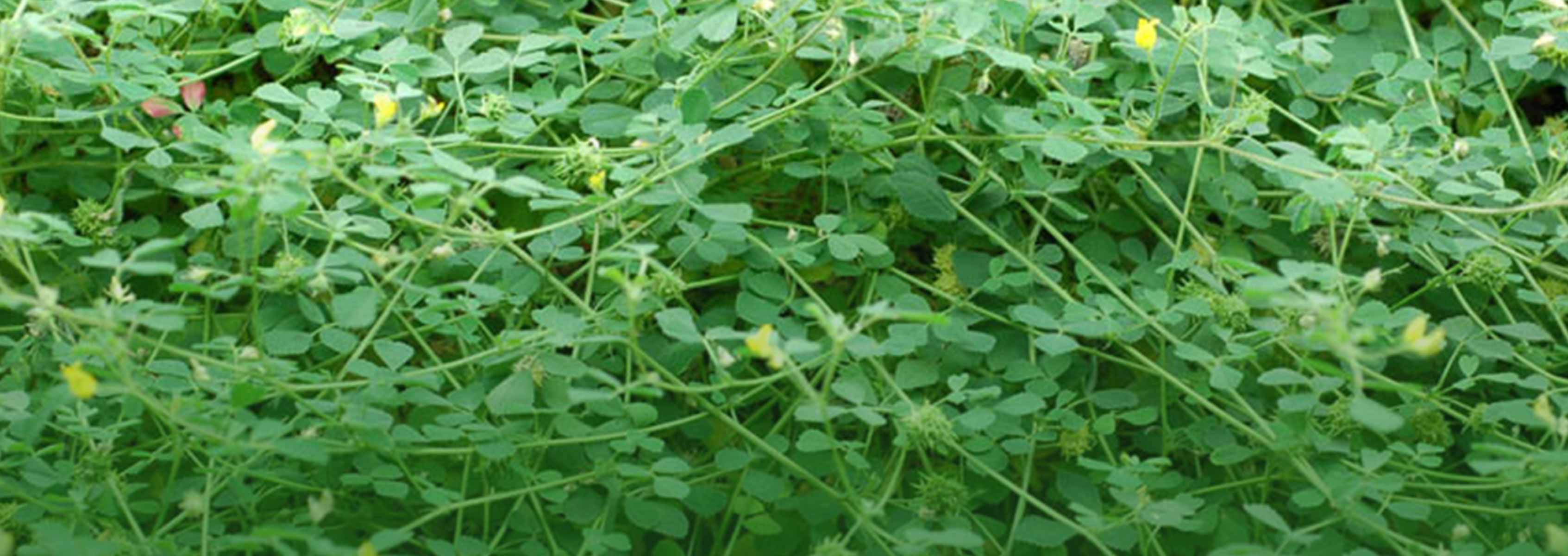
Medicago truncatula, a close relative of alfalfa, is a preeminent model for the study of the processes of nitrogen fixation, symbiosis, and legume genomics. The genome was initially sequenced in a collaboration between the University of Oklahoma, TIGR (now JCVI), the Sanger Institute in the UK and Genoscope in France with funding from Samuel Roberts Noble Foundation, the National Science Foundation and the European Union's Sixth Framework Programme INRA (France) , and the BBSRC (UK).in the United Kingdom with funding from the EU and BBSRC.
Sequencing Strategies
The initial published sequence Mt3.5 assembly was based upon a BAC-by-BAC approach. Later, we generated 454 mate pair sequence and extensive Illumina paired end (PE) and mate pair (MP) sequence that was used together with the previously generated BAC- and fosmid-end sequences to produce an AllPaths assembly. The ALLPATHS scaffolds were anchored onto the 8 linkage groups on the basis of alignments to both the optical map (OM) and genetic map derived from genotyping-by-sequencing (GBS) data. High quality contiguous BAC sequences were patched into the new Mt4.0 pseudomolecules to close gaps and reduce polymorphisms between the assembly versions, where possible.
Annotation Overview
The new version of the genome (Mt4.0) was re-annotated using JCVI in-house structural and functional annotation pipelines, integrating a number of tiers of evidence: ab initio gene predictors, legacy Mt3.5v5 annotation, EST/RNA-seq assemblies and proteomic data, culminating in an annotation release, Mt4.0v2. A total of 50,376 gene loci (encompassing 57,585 gene models) were annotated by this pipeline, which were then binned into high (HC) and low (LC) confidence classes (~32k HC and ~19k LC loci), based on different levels of EST/RNA-seq/protein support and synteny to related plant genomes.
The Medicago Genome DataBase and Legume Data Federation
JCVI hosts the M. truncatula genome sequence and annotation in three forms: a Tripal database, JBrowse and an instance of InterMine named MedicMine. These databases also form part of a larger consortium of legume databases known as the Legume Federation (legumefederation.org). The Legume Federation is a joint project with USDA-ARS-Iowa State and the National Center for Genome Resources. Together, these three centers house genomic, genetic and phenotypic (QTL) data for around 10 legume crop species including soybean, common bean, peanut, chickpea, clover, lupin and others. The goal of the project is to provide cross-species links between these plants at the genomic, genetic and phenotypic levels to further legume research and breeding.
Publications
BMC genomics. 2014-04-27; 15.312.
An improved genome release (version Mt4.0) for the model legume Medicago truncatula
Nature. 2011-11-16; 480.7378: 520-4.
The Medicago genome provides insight into the evolution of rhizobial symbioses
Plant biotechnology journal. 2011-10-01; 9.8: 922-31.
Large-scale transcriptome analysis in chickpea (Cicer arietinum L.), an orphan legume crop of the semi-arid tropics of Asia and Africa
Plant molecular biology. 2008-08-01; 67.6: 567-80.
Gene expression profiling of M. truncatula transcription factors identifies putative regulators of grain legume seed filling
Plant methods. 2008-07-08; 4.18.
A community resource for high-throughput quantitative RT-PCR analysis of transcription factor gene expression in Medicago truncatula
Plant physiology. 2007-06-01; 144.2: 538-49.
Legume transcription factors: global regulators of plant development and response to the environment
The Plant journal : for cell and molecular biology. 2007-05-01; 50.3: 529-44.
Arbuscular mycorrhizal symbiosis is accompanied by local and systemic alterations in gene expression and an increase in disease resistance in the shoots
BMC genomics. 2006-10-24; 7.272.
Sequencing Medicago truncatula expressed sequenced tags using 454 Life Sciences technology
Proceedings of the National Academy of Sciences of the United States of America. 2006-10-03; 103.40: 14959-64.
Legume genome evolution viewed through the Medicago truncatula and Lotus japonicus genomes
Current opinion in plant biology. 2006-04-01; 9.2: 122-7.
Annotating the genome of Medicago truncatula
BMC plant biology. 2005-08-15; 5.15.
Highly syntenic regions in the genomes of soybean, Medicago truncatula, and Arabidopsis thaliana
Plant physiology. 2005-05-01; 138.1: 38-46.
Databases and information integration for the Medicago truncatula genome and transcriptome
Plant physiology. 2005-04-01; 137.4: 1174-81.
Sequencing the genespaces of Medicago truncatula and Lotus japonicus
The Plant cell. 2003-09-01; 15.9: 2106-23.
Transcript profiling coupled with spatial expression analyses reveals genes involved in distinct developmental stages of an arbuscular mycorrhizal symbiosis
Plant physiology. 2002-10-01; 130.2: 519-37.
Genome-wide identification of nodule-specific transcripts in the model legume Medicago truncatula
Funding
Funding provided through the National Science Foundation (NSF).