This Earth Day, I Stopped Studying Waste and Started Picking It Up
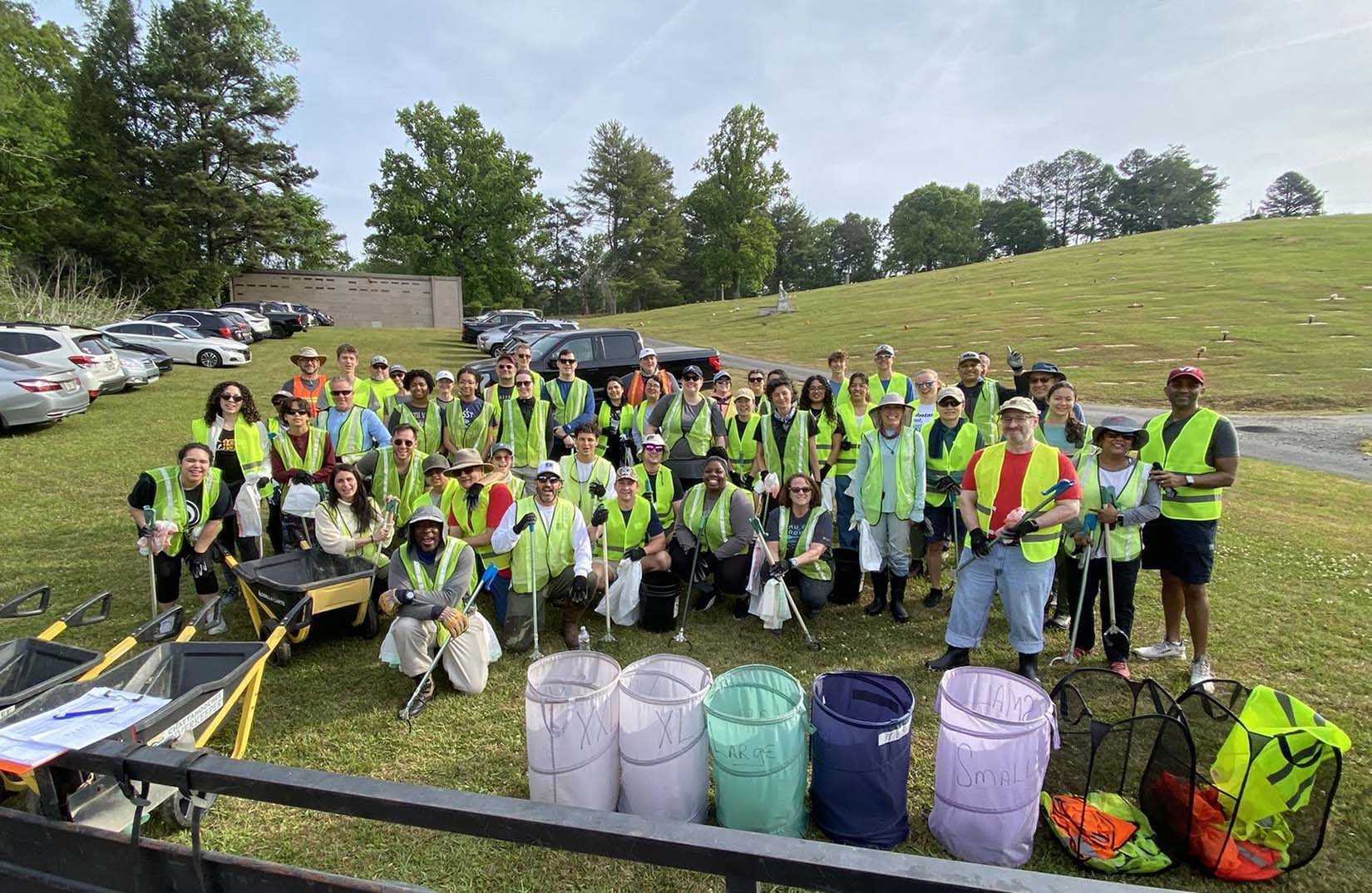
Hollywood Cemetery is part of the SimplyGreen vision led by Shayda Frost and Timothy Amoui, a reimagining of abandoned spaces into places of sustainability, reflection, and community. It's a reminder that environmental work doesn't just happen in pristine landscapes, it happens in the overlooked, the forgotten, and the in-between. This Earth Day, that vision came to life as I joined Chattahoochee Riverkeeper for a river cleanup woven directly through the landscape of Hollywood Cemetery.
What we found
Like most cleanups, there were the expected items; bottles, bags, debris. But what stayed with me most were the extremes. Devine GA played a role in this clean up, helping remove invasive vines that were overtaking parts of the landscape. A few people mentioned how it was striking, how beautiful the area was, and at the same time, how overwhelmed it had become by both waste and aggressive plant growth.
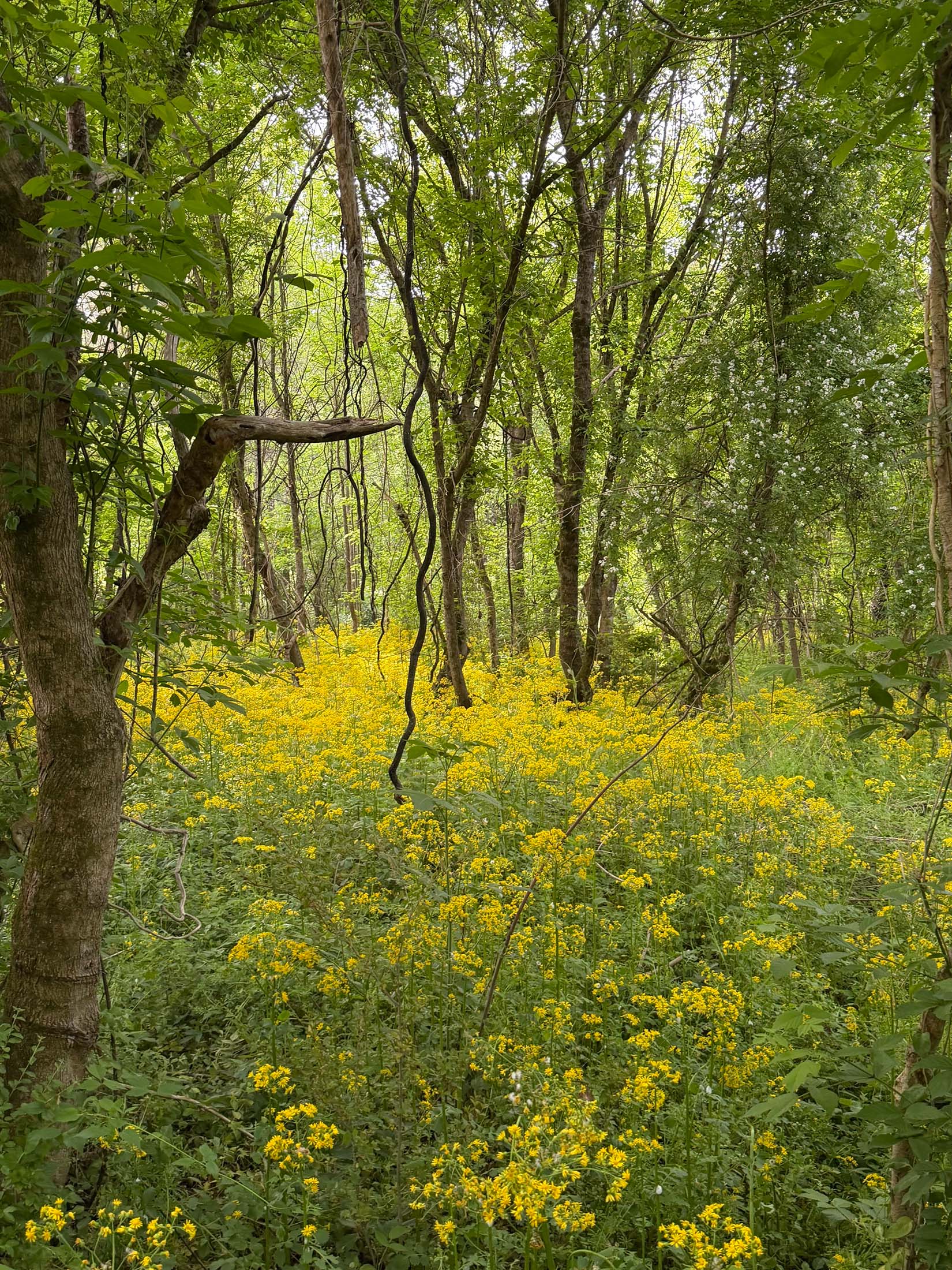
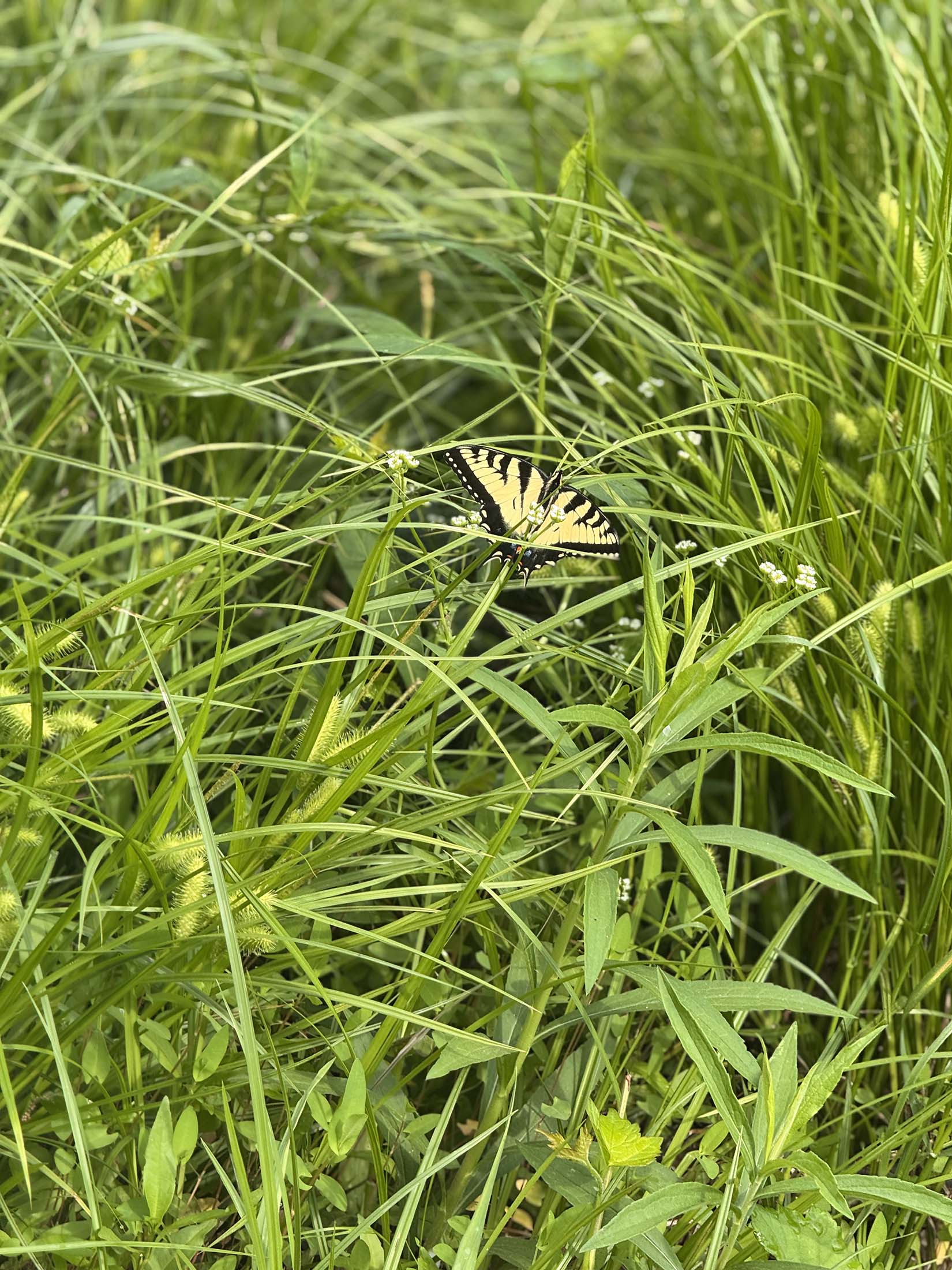
That contrast really stuck with me. These spaces feed into local waterways, meaning anything left behind; plastic, debris, even invasive species, doesn't stay contained. It moves downstream, ultimately impacting the Chattahoochee River itself. It's exactly why the work of Chattahoochee Riverkeeper is so critical, protecting not just the river, but everything connected to it.
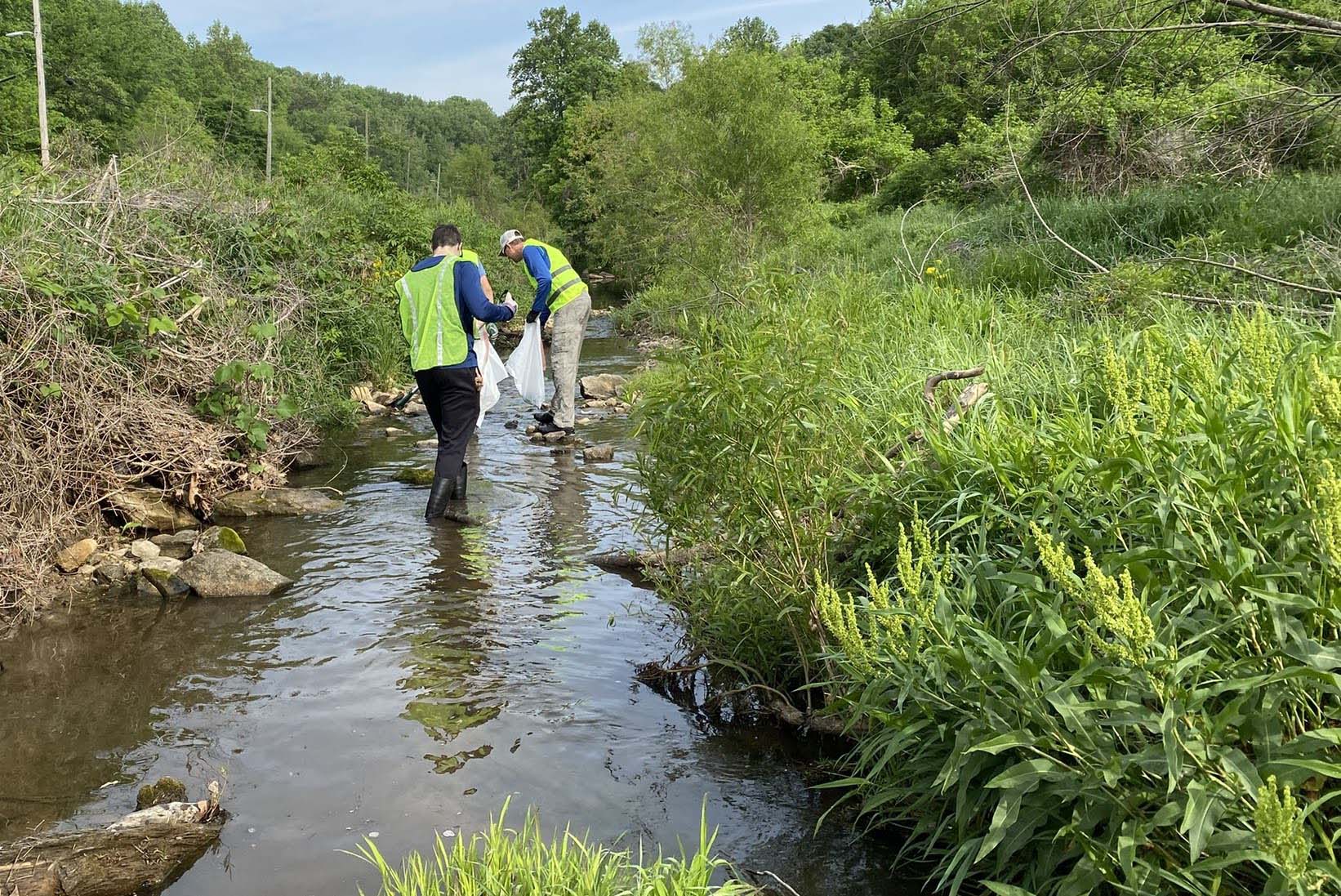
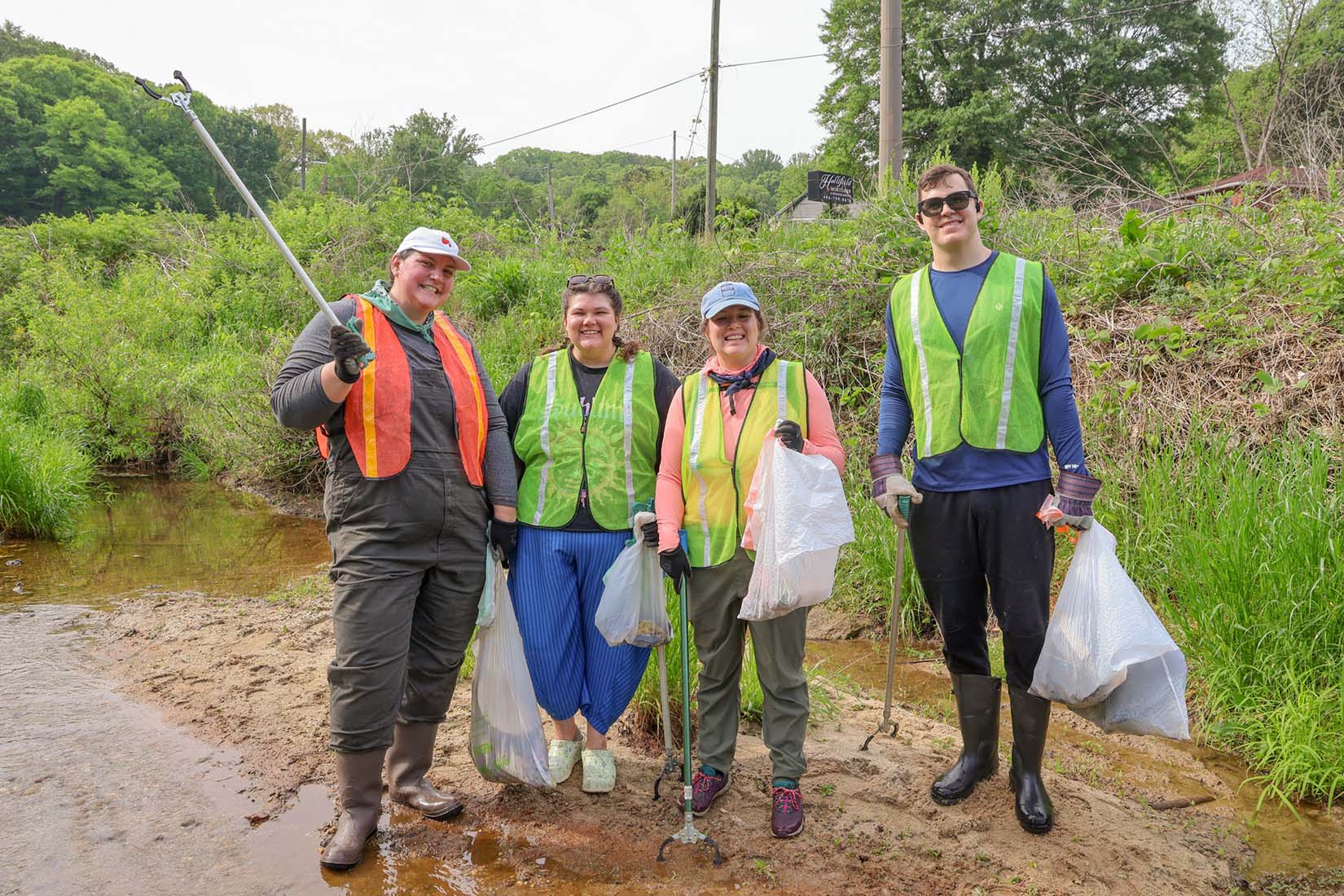
When we broke off into teams, we started in a creek. A lot of people moved quickly downstream, searching for the big pieces—the things you can pull out, carry away, and feel like you've made immediate progress.
But I kept thinking about the work we do at the J. Craig Venter Institute, and I found myself slowing down, getting hyper-focused on the minute. The closer I looked, the more I could see.
There were the microplastics. Tiny fragments scattered across the creek bed and riverbank. Easy to miss. Impossible to fully remove.
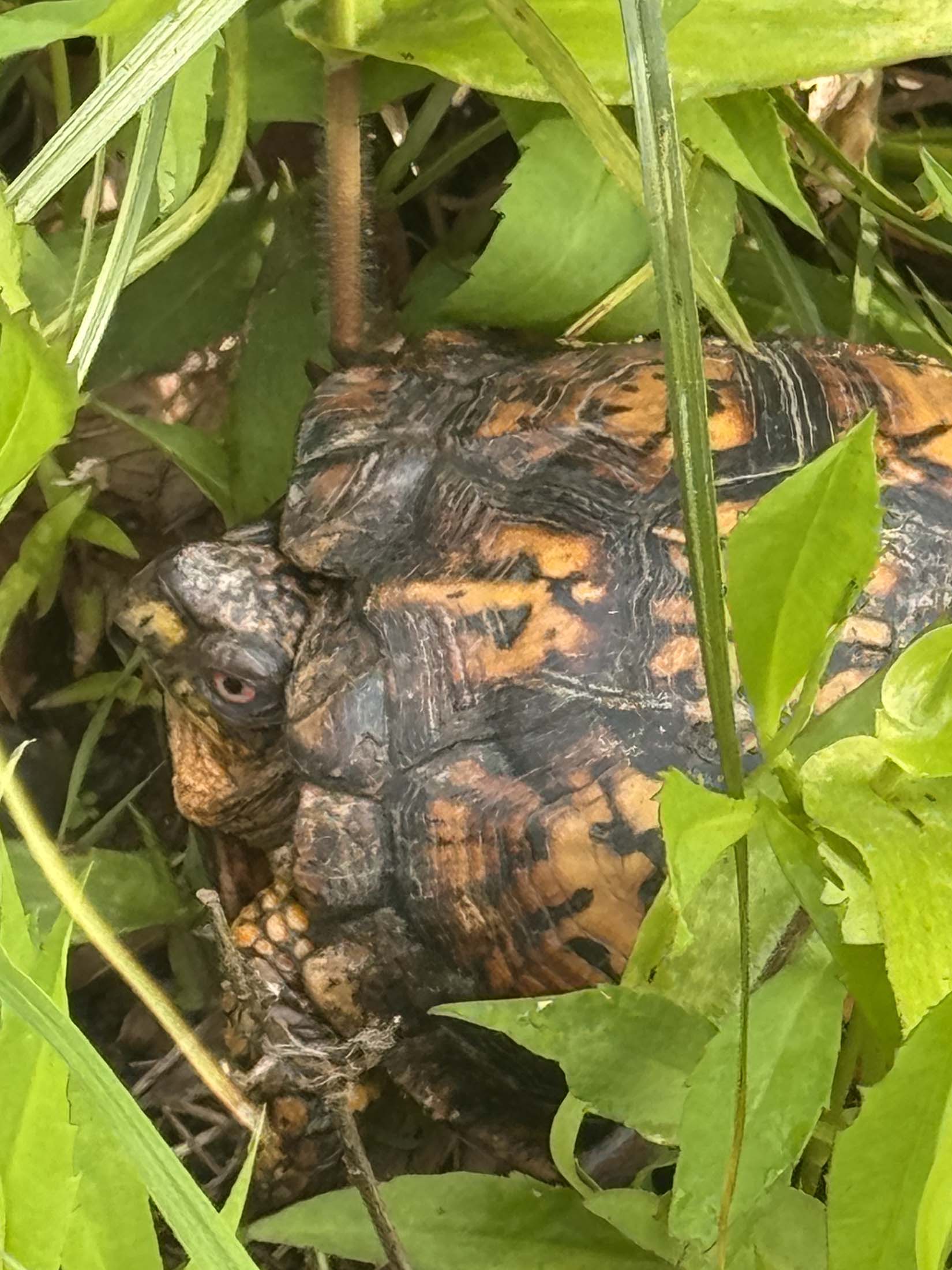
And right there, in the middle of it, was a native box turtle, moving slowly through the brush, completely unaware, seemingly grumpy. That moment stuck with me. Life, continuing as it always does, even as the environment around it quietly changes in ways we can't always see.
Given that this was a cemetery, I also developed a new frustration: plastic silk flowers. They had traveled far beyond where they were placed. I found them tangled in roots, buried in soil, breaking apart into smaller and smaller pieces. Not just decoration anymore, but long-term pollution.
Towards the end of the cleanup, I found myself with another volunteer in a completely different battle. Fighting with and pulling a shopping cart out of the ground. It was fully embedded in the earth, heavy, resistant, almost like it had become part of the landscape itself.
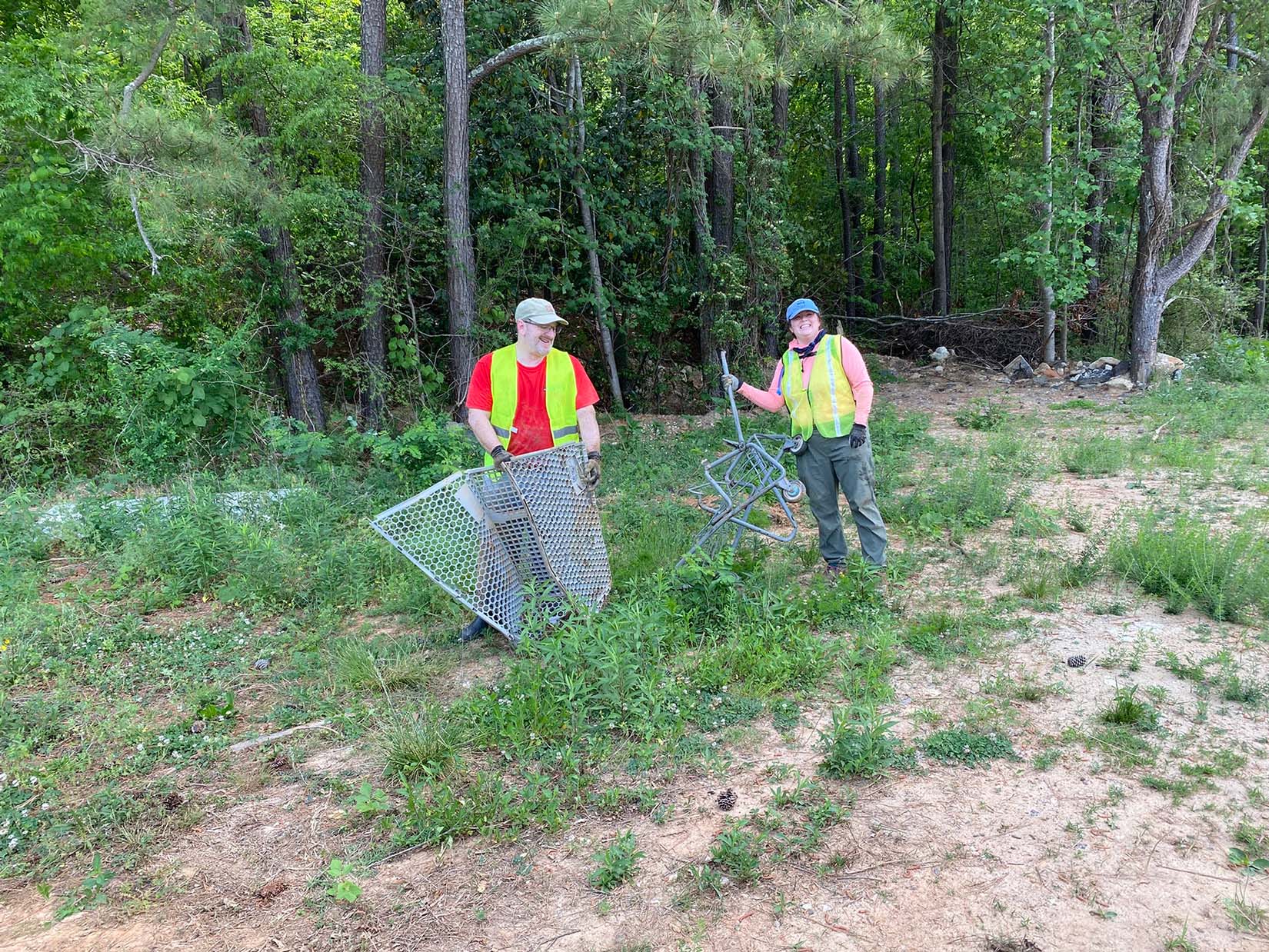
That contrast stayed with me: from something as large and immovable as a shopping cart… to fragments so small they blend into the soil.
Both are part of the same story.
Why this hit different
In our work at the J. Craig Venter Institute, I spend a lot of time thinking about plastic, specifically what happens after it enters the environment.
Through the National Science Foundation (NSF) funded CIRCLE project, we're exploring how biology can help address plastic waste at scale. Researchers like Erin Garza, PhD are studying microbial communities that live on plastics in environments like the deep sea. Erin spends weeks to months at sea on voyages, searching for organisms capable of breaking them down. At the same time, the project is led by the work of Tae Seok Moon. His lab is advancing technologies that can convert mixed plastic waste into valuable products, pushing us closer to a circular bioeconomy. You can read more about that in their recent Nature publication "Engineering microbial consortia for mixed plastic upcycling."
But here's the thing: Standing on that riverbank, picking up plastic piece by piece, the scale of the problem becomes very real.
Plastic doesn't disappear, it fragments. Something Erin likes to remind young scientists about when we go out into the community at events like the Festival of Science and Engineering. And once it's small enough, it becomes part of the ecosystem.
What I'm taking with me
This Earth Day wasn't just about cleaning up a river, it was about perspective. It's easy to think of environmental challenges as distant or abstract. But they're not. They're local. They're visible. They're in the places we walk by every day.
We ultimately got that shopping cart out, and in that moment, it felt like a victory.
But walking away, I couldn't stop thinking about everything we couldn't carry with us. The microplastics still scattered through the soil, woven into the ecosystem, nearly invisible unless you're looking closely.
A win, yes. But also a reminder of how much work remains, both in the field and in the science. If you're looking for a way to get involved this Earth Day, I highly recommend connecting with Chattahoochee Riverkeeper and supporting the work happening right here in our communities. Happy Earth Day.